
Listening!
—Story Probe: a journey to someone who wants to be heard
The Story Probe is a workshop series by the Interactive Media Foundation. It is aimed at media professionals and people from civil society who want to tell stories for people they have not been able to reach so far.
There are people who do not feel heard and yet want to be heard. They are neither loud nor do they drift into extremes. This is why they barely feature in public debate and the media. Yet their voices are like seismographs: they respond to change and sense what is just emerging.
The Story Probe is an invitation to meet these people in empathic dialogue. Market research questionnaires will not help us here. Instead, we come with curiosity, with time and, above all, with open ears. People from film and media, journalism, culture and civil society set out together on a new path. Over around two months, each of them gets to know a person they would otherwise probably never have met.
This is not about measuring target groups or projecting interests onto them. The Story Probe is a deeply personal encounter with another person, but also with ourselves, with our assumptions, prejudices and blind spots. Instead of confirming hypotheses, we let ourselves be surprised, moved and inspired by what is still undiscovered and unspoken.
Key facts at a glance:
Period: 21 January to 20 March 2027
Group: 12 participants in fixed teams of two or three
Facilitation: Raimo Lång, former head of content development at Finnish broadcaster Yle
Research partner: More in Common Germany
Language: English as the working language, encounters in German, materials in both languages
Participation: €200 / €800 / €1,400, based on self-assessment
The Story Probe in five stages:
First workshop: Who are we not reaching with our work, and why? Who exactly do we want to reach?
First encounter: Where do I find you?
Second workshop: What have we learned about the other person? How can we get to know each other better?
Second encounter: Who are you really?
Third workshop: Which stories are emerging?
Why listen?
Our partner More in Common is an international non-profit organisation that researches how social cohesion and trust in democracy can grow again. Its research asks two central questions: How can people with different perspectives see each other as people again? And how do we approach those who are unfamiliar to us, without trying to convince them or win them over to our side?
These questions move us at the Interactive Media Foundation, too, as they do many people working in media, culture and civil society. Our search for answers begins with a step back. This is not about finding consensus, but about listening to the other person and thereby better understanding their values, attitudes and motivations. Beliefs are deeply rooted in identity, in moral intuitions and in lived experience, as More in Common’s research shows. Facts and figures alone will not get us any further.
For its study “Ringen um Deutschland” (Struggling over Germany, 2026), More in Common surveyed more than 6,000 people. It counts around a quarter of the population among the so-called “socially invisible”. According to More in Common, these people often come across as less self-confident, are less interested in politics and even avoid news and discussions. Yet quiet does not mean without impact: many of them hold everyday life together at work, in their families and in their neighbourhoods.
Two people, one encounter
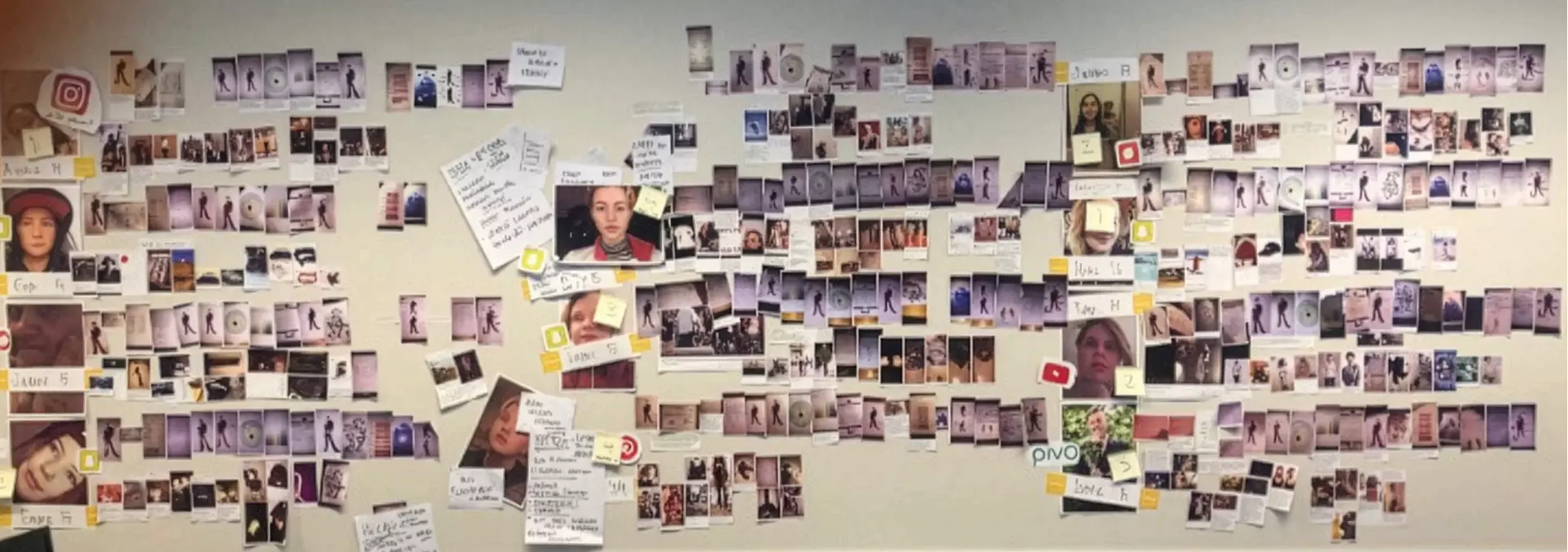
There are two roles in the Story Probe. The workshop participants are the researchers: they ask, listen and look for unconscious patterns of interest. Their counterpart is the informant. This is a person from a world we otherwise have no contact with, for example from among the so-called “socially invisible”.
The encounter takes place one to one: each participant accompanies one person. The informants do not take part in the workshops. They open up their everyday lives to us, their joys, their worries, their wishes. First in the form of a diary they design themselves, later also in a personal conversation.
Questions you would not usually ask
The Story Probe is based on the approach of Raimo Lång, who leads the workshop series in this development phase. There is no list of questions of the kind familiar from audience surveys. The questions only emerge during the workshop, from the participants’ motivations and in line with the personas they develop. The starting point is one’s own curiosity: What interests me? What puzzles me? What might I even feel uncomfortable asking?
This gives rise to questions that are unexpected for the informants and touch on what is most personal to a person. A few examples show what they can sound like:
What do you want to do with your body?
What with your time?
What do you want to communicate, and how?
What is missing in your life?
Playful tasks are also possible: for example, planning an escape with your best friend, with only €10,000 in your pocket.
The informants respond in their own way. They can draw, take photos, speak or write. This creates impressions that are more multi-layered than anything that could be asked directly.
What we listen for
Of course we listen to what people say explicitly. But above all, we are interested in what lies between the lines: needs that resonate beneath the surface, a kind of inner operating system.
We look for invisible patterns and signals: the surprising, the unexpected, the fragile. What has not yet been put into words and what the other person may not yet have consciously thought themselves. We listen to those who are not heard but want to be heard. Their needs are often symptomatic of something that is growing into our culture and society, where change can be felt but is not yet visible.
Working out these signals together from the diary entries and conversations is itself an important part of the journey. They are the material from which new stories in new formats can emerge after the workshop.
Where the idea of the Story Probe comes from
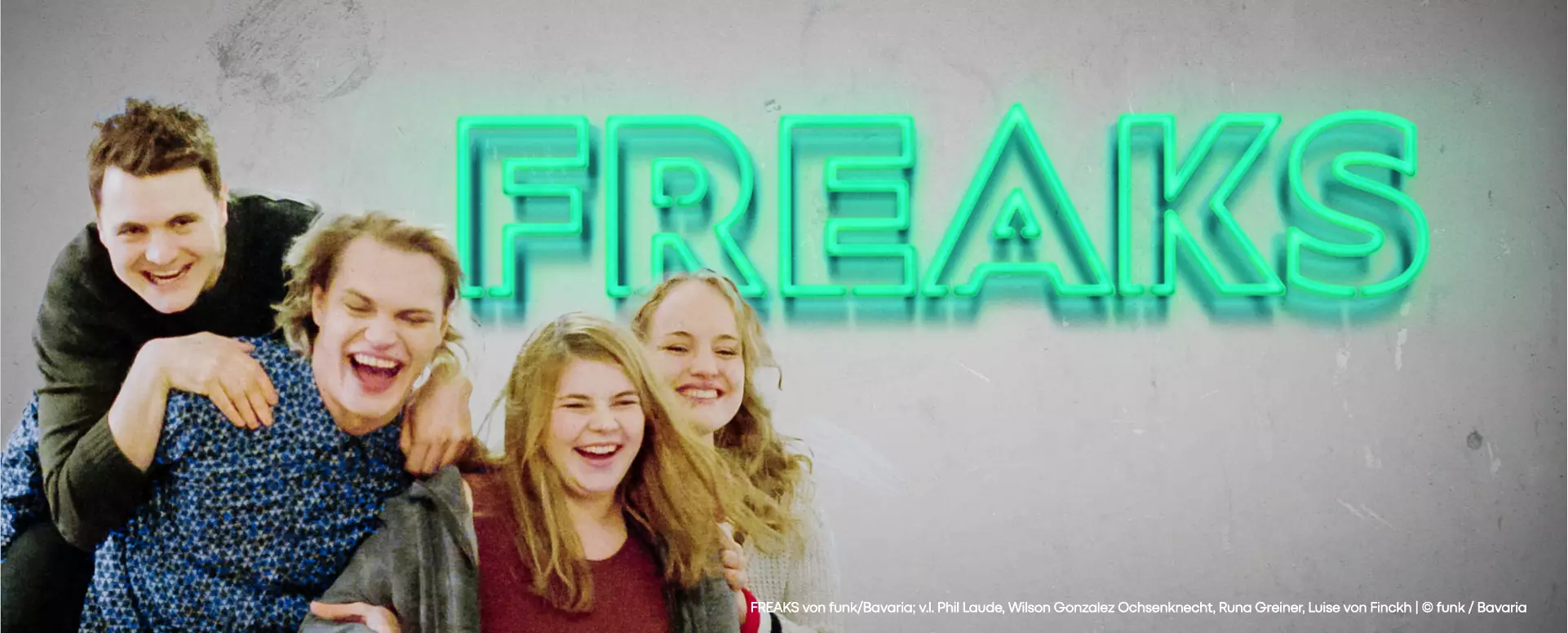
The approach is inspired by Raimo Lång’s “Audience Probe” at Finland’s public broadcaster Yle, which has been using this method with great success since 2008. Yle developed new programmes for people whose interests had previously been completely unknown and overlooked. Empathic dialogue with the “invisible” gives rise to stories and formats that last for years and anticipate trends. One of these formats is the series “Sekasin”, which funk adapted in Germany as “FREAKS” in 2018.
Methodologically, the approach loosely follows the concept of “cultural probes” (Gaver et al. 1999; Mattelmäki 2006).

© funk
Yle’s series “Sekasin” (Mental) was adapted in Germany by funk in 2018 as “FREAKS” ...
© Yle
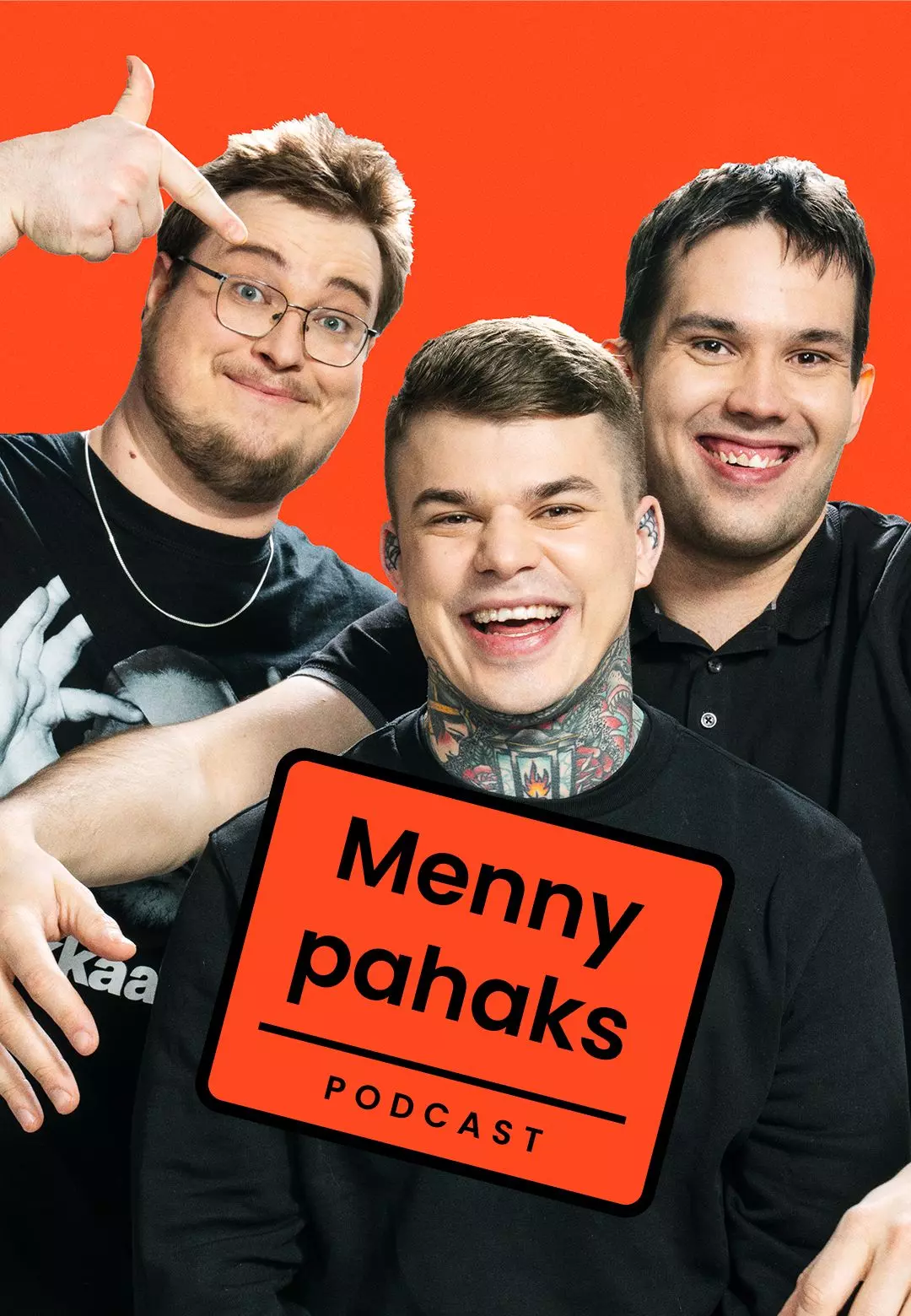
“Menny pahaks”: a fact-based format from Yle, driven by content creators.
© france.tv
… and in 2019 by france.tv as “Mental.”
© funk
Yle’s series “Sekasin” (Mental) was adapted in Germany by funk in 2018 as “FREAKS” ...
© Yle
“Menny pahaks”: a fact-based format from Yle, driven by content creators.
© france.tv
… and in 2019 by france.tv as “Mental.”
© funk
Yle’s series “Sekasin” (Mental) was adapted in Germany by funk in 2018 as “FREAKS” ...
© Yle
“Menny pahaks”: a fact-based format from Yle, driven by content creators.
© france.tv
… and in 2019 by france.tv as “Mental.”
© funk
Yle’s series “Sekasin” (Mental) was adapted in Germany by funk in 2018 as “FREAKS” ...
© Yle
“Menny pahaks”: a fact-based format from Yle, driven by content creators.
© france.tv
… and in 2019 by france.tv as “Mental.”
The method journey in detail
No one travels alone. From the very beginning, participants work in fixed teams of two or three. They accompany each other through the entire process, think things through together and support one another. In addition, there is a central contact person from the Interactive Media Foundation throughout, acting as production lead.
What the Story Probe gives participants
Learning and experiencing listening anew: we listen beyond our own assumptions and prejudices, open to what we do not expect. Participants take this attitude and the method behind it into their own work.
Insights into the lives of people you would otherwise never meet.
Surprises and moments of being moved that only arise in empathic dialogue.
Inspiration for stories and formats: for what is not yet obvious, and a glimpse into the future and what will move us.
A personal, enriching experience, both with one’s own counterpart and in the interdisciplinary exchange within the group.
Participation fee
The Interactive Media Foundation is a non-profit organisation and makes no profit from the Story Probe. The fee covers part of the costs: facilitation by Raimo Lång, research input from More in Common, support from our production lead, as well as rooms and materials.
The fee should not exclude anyone. Our pricing is based on trust: please choose the tier that matches your own means or those of your organisation.
Want to join?
The Story Probe thrives on different perspectives. That is why we deliberately put together a mixed group of twelve participants from film and media, journalism, culture and civil society, rather than going by the order of registration. We look forward to your application with:
your name and organisation (add a short bio, if you want)
your field of work (e.g. communications, editorial, research, education and outreach, production)
your motivation: Whom do you want to reach with your work, and what do you hope to gain? (max. 300 words)
to demokratie@interactivemedia-foundation.com
Sources that inspire us: Mau, Triggerpunkte (2023) · Haidt, The Righteous Mind (2012) · Sahebi, Verbinden statt spalten (2025) · De Meyer (2025) · Allport (1954) · Pettigrew & Tropp (2006) · Gaertner & Dovidio (2000) · The Enemies Project (2026)
In collaboration with
Related projects

A multimedia campaign on climate justice
Not Just Celsius
Youth take the climate crisis to the highest court

A multi-format project on the mechanisms of data-driven manipulation
Your Data Mirror
About the mechanisms of data collection.